
21 octobre 2026
Screen Printing vs DTF Transfers: Setup Fees, Colour Count, and Real Cost in Canada
Screen printing and DTF transfers are not rivals for the same job. Screen printing still prints the cheapest simple colour when the quantity is high enough to bury the screens. DTF transfers win when the art is full colour, the run is short, the garments are mixed, or every piece needs a different name. This guide is the cost and workflow version of that choice for Canadian shops — setup fees, colour count, press time, and where Discount DTF gang sheets fit.
If you only need a short “which method for a small run?” card, start with DTF vs screen printing for small runs. The rest of this page is the math behind the quote.
What you are actually paying for
A screen quote is built from three piles: the blank, the print, and the setup. Each colour at each location needs its own screen. Many Canadian screen shops price that setup somewhere around $25–$40 per colour, per location, then a lower per-shirt ink charge once the screens exist. A four-colour front is four setups before the first shirt is good. A front and a sleeve doubles the locations.
A DTF quote ignores colour count. You pay for printed square inches on film. Regular apparel DTF gang sheets at Discount DTF list around $0.018–$0.020 per square inch, and bulk runs can reach from $0.015/in². That floor is for regular apparel film — glitter, reflective, glow, and UV DTF are separate rates. There is no per-colour screen charge, because the printer lays down the whole image, including the white underbase, in one pass on PET film.
A plain cost snapshot
These are transfer-only examples using published gang-sheet rates, set beside a typical screen setup. Your blank, your press labour, and the screen shop’s print price still sit on top.
| Job | Screen printing (typical) | DTF transfer film |
|---|---|---|
| 12 tees, 4-colour left chest (about 4″ × 4″, 16 in²) | Four setups. At ~$30 each, about $120 in screens before ink — roughly $10 a shirt in setup alone. | 16 in² × ~$0.018–$0.020 is well under $1 per transfer. Bulk from $0.015/in² goes lower. |
| 24 hoodies, full-colour 12″ × 14″ front (168 in²) | Photo or simulated-process work often means many screens, or a shop that would rather not burn them for two dozen pieces. | 168 in² × ~$0.018–$0.020 is about $3.00–$3.40 per transfer. One film, unlimited colours. |
| 200 tees, one-colour front, one location | One screen spread across 200 pieces. This is where screen printing usually wins the unit price. | Film can still be inexpensive, but you press every shirt. At this volume a dedicated screen run is often the better invoice. |
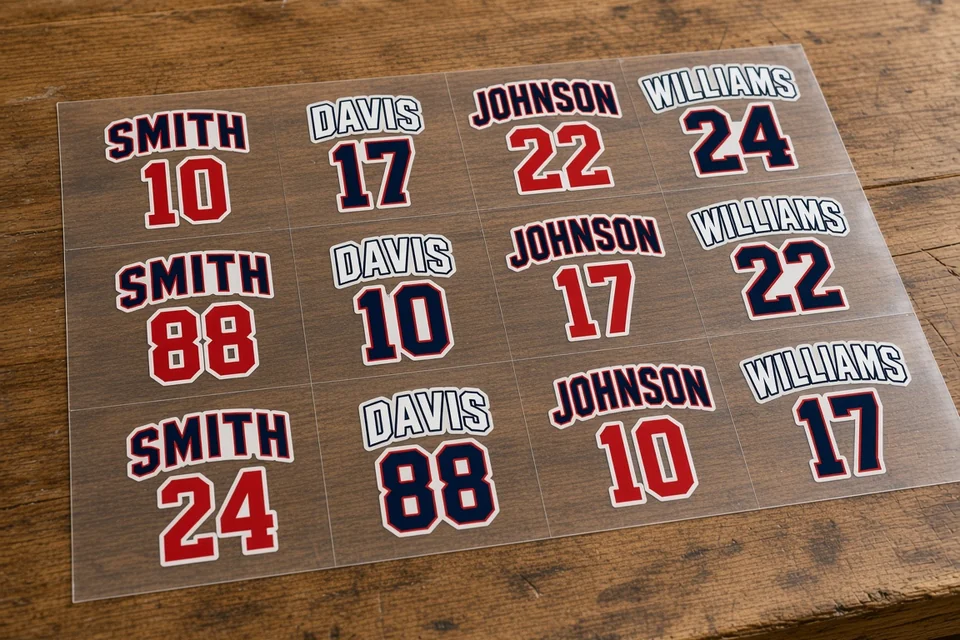
| 18 jerseys, unique name and number | A new screen per name is not a real plan. Shops usually switch methods here. | Nest every name on one gang sheet. Press one athlete at a time. No extra colour charges. |
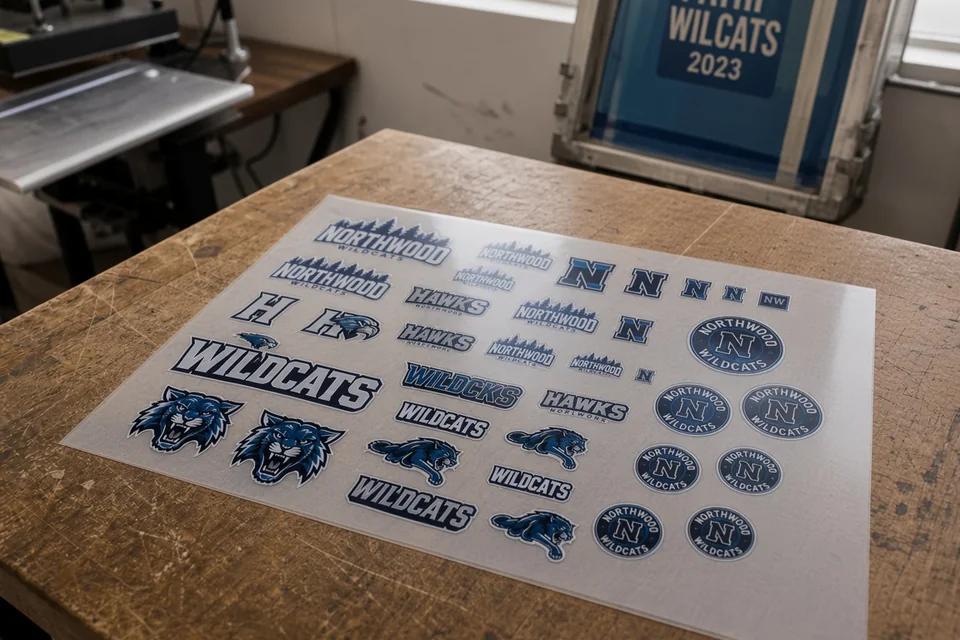
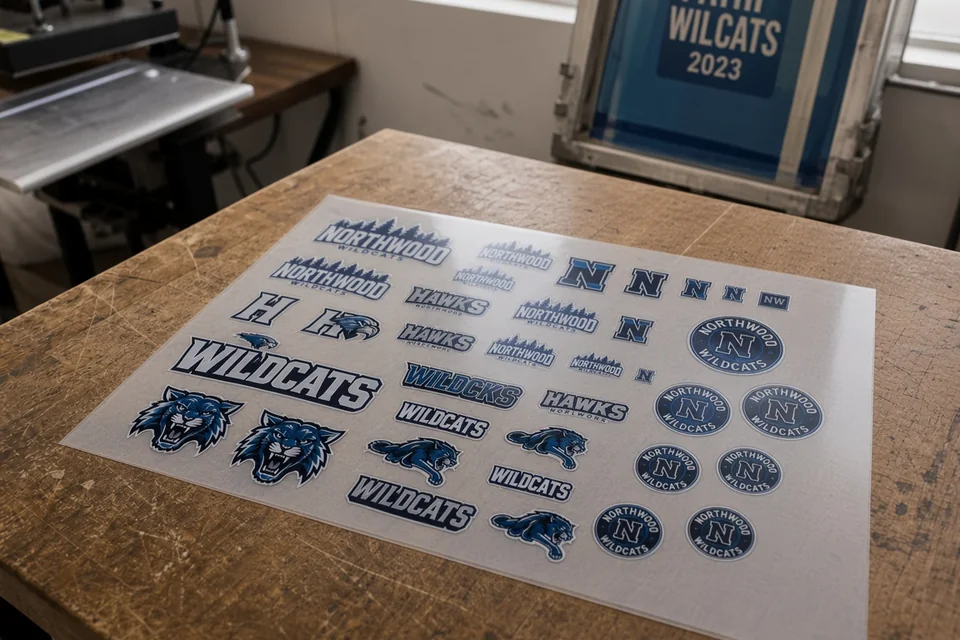
Gang sheets are 24 inches wide, with a 24″ × 24″ minimum. That minimum is the sheet, not a per-design screen. Nest several logos, sleeve hits, and client jobs on the same canvas so the square inches you already need also fill the sheet. When you would rather send art and quantity without building the layout, Easy Upload prices true art size × copies, with cutting as an optional paid add-on.
Colour count is the hinge
One spot colour on two hundred cotton tees is a screen-printing job. The screen is a fixed cost, and the press flies once it is registered.
Three or more colours, a gradient, a photo, or a logo that changes every season is a DTF job long before you hit “large run” numbers. Each extra screen colour adds setup, registration time, and often a dark-garment underbase that is its own screen. On film, that underbase is already in the print. A navy tee and a white tee can share the same transfer.
Shops that quote both methods honestly tend to draw the line like this:
- Under about 24 pieces, especially 2+ colours — DTF. Setup would dominate the screen invoice.
- About 24–72 pieces — simple one- or two-colour marks can go either way; full colour, photos, and mixed sizes stay on film.
- About 100+ pieces of one simple design — screen printing, if you can wait for screens and you do not need each shirt to differ.
Those ranges are planning bands, not a law. A six-colour simulated process on 80 shirts can still belong on DTF. A one-colour left chest on 40 staff polos can still belong on a screen if the shop already has the frame burned.
Time, minimums, and the Canadian bench
Screen time is front-loaded: art separations, screens, ink, a press that is free, then reclaim. Many shops quote several business days, longer in event season, and a 12- or 24-piece minimum so the setup is worth running.
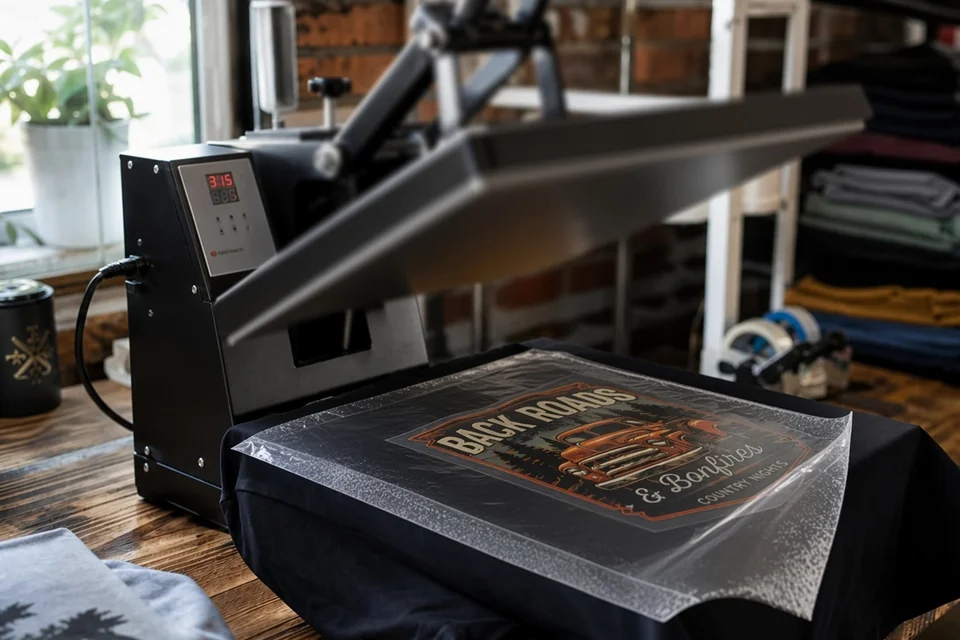
Regular DTF at Discount DTF is printed in Canada. Orders in by 1:00 PM are in the same-day processing window. Specialty films and UV DTF are often 1–3 business days — do not promise a customer same-day on those. You still press locally: about 282–290°F, 9 seconds, medium pressure, peel hot (poly and athletic closer to 260–270°F). Tracked shipping is Canada-wide. Transfer orders over $125 CAD ship free; express is free over $500.
The practical minimum for a decorator is a heat press, not a darkroom. You are not storing emulsions, reclaim chemistry, or a wall of frames for every client logo you might reprint once.
Hand feel, wash life, and the jobs screens still own
A well-cured plastisol or discharge print can feel like part of the shirt, especially a small one-colour mark. Modern hot-peel DTF is soft for a film transfer, and larger prints relax after a wash, but it is still a layer. If a retail brand’s whole point is an ultra-soft spot colour on heavyweight cotton, and the quantity is high, screen printing (or discharge, when the shirt can take it) is the finish to spec.
Screen printing also still owns some effects film does not copy cleanly: high-density, puff, and certain specialty inks. Exact Pantone spot matching is a screen conversation. DTF is a process-colour print with a white underbase — excellent for photos and brand art, not a substitute for a single mixed PMS tub.
DTF owns the rest of the week: cotton, blends, polyester, and nylon when you dial the press down; light and dark garments from the same film; samples before you commit a screen; and any order where the design will change before the screens would pay for themselves.
Names, numbers, and mixed orders
Team jerseys, camp shirts, and staff polos with a name under the logo are where screen quotes fall apart. Eighteen unique backs means eighteen separations or a digital method. On a gang sheet those names are just more art on the same film. You press them one at a time and you are not holding a case of preprinted wrong sizes.
The same sheet can carry a left-chest mark, a back number, and a sleeve hit for three different garment colours. That is the hybrid most Canadian decorators actually run: screen the big one-colour wholesale reorder, gang-sheet everything that would need another frame.
How to choose before you quote
- Count colours and locations. One colour, one spot, big quantity — price a screen. Three or more colours, or a photo — price film.
- Count unique designs. If names or versions multiply, stop burning screens.
- Add your press minutes. DTF film can be cheap and still lose if you are pressing 300 identical one-colour shirts by hand.
- Separate the blank from the decoration. Compare print methods on the decoration line, then add the garment. A cheap transfer on the wrong blank is still a bad shirt.
- Test the film once. A sample pack tells you hand feel on your press before a season of jobs depends on it.
Questions shops ask
Is DTF cheaper than screen printing in Canada?
On short runs and on anything with several colours, yes — because you skip setup. On a large one- or two-colour reorder, screen printing is usually cheaper per shirt once the screens are paid for. Compare the whole invoice: setups, print, blanks, and your labour.
How many colours tip the job to DTF?
Past two colours, setup stacks fast. At three or four colours, even a few dozen shirts often cost less on film than in screens. Full colour and photos are DTF from the first piece.
Can DTF replace screen printing for a 500-piece order?
It can print it. It is rarely the best cost if the design is one simple colour and you already have screen capacity. Use DTF for the photo version, the samples, and the names; keep the 500-piece spot-colour run on press.
Is there a white-underbase upcharge on DTF?
No separate underbase screen. The white is part of the printed area you already pay for per square inch. Dark and light garments use the same transfer.
What is the gang sheet minimum?
24 inches wide, minimum sheet 24″ × 24″. Nest multiple designs so you are not buying empty film. Easy Upload is there when you want art-size pricing instead of building the sheet yourself.
Where to start
Price the decoration before you promise a method. If the job is full colour, short, mixed, or personalized, build it on a DTF gang sheet and press it in-house. If it is a few hundred identical one-colour shirts, call it a screen run and keep the film for everything the screens would make expensive.
New to the film? Order a sample pack, press it at 282–290°F for 9 seconds, and peel hot. Then quote the next small full-colour job without a setup line.